Looking back: Gasteig Cultural Center redevelopment
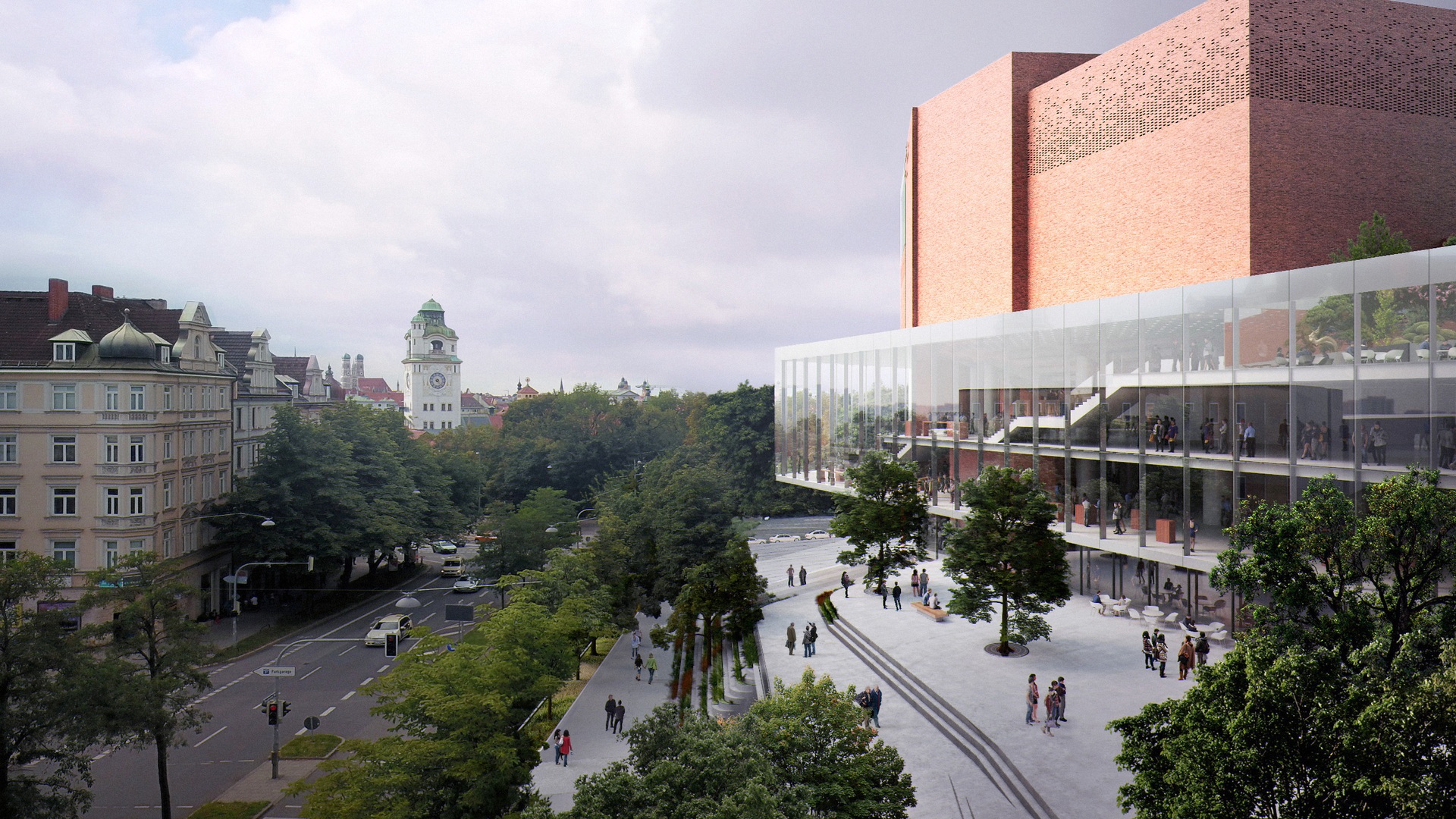
"Could it really be that simple?"—We were, at first, surprised ourselves by just how effective the minimal intervention we proposed for the redevelopment of the Gasteig Cultural Center in Munich turned out to be.
At the time of the competition in 2018, Europe’s largest cultural center had been deeply rooted in Munich’s urban fabric for decades—a defining landmark for the city’s identity, now in need of renewal. Since its opening in 1984/85, the Gasteig has brought together a diverse array of cultural institutions, uniting people of all ages and backgrounds, bridging the gap between high culture and popular culture: students rehearsing for music studies, audiences attending concerts at the Philharmonic, or visitors leafing through comic books in the library. It has always been a place of community, embodying every facet of culture—a place where the head of the Adult Education Center would deliver the morning newspaper to a homeless man out front each day.
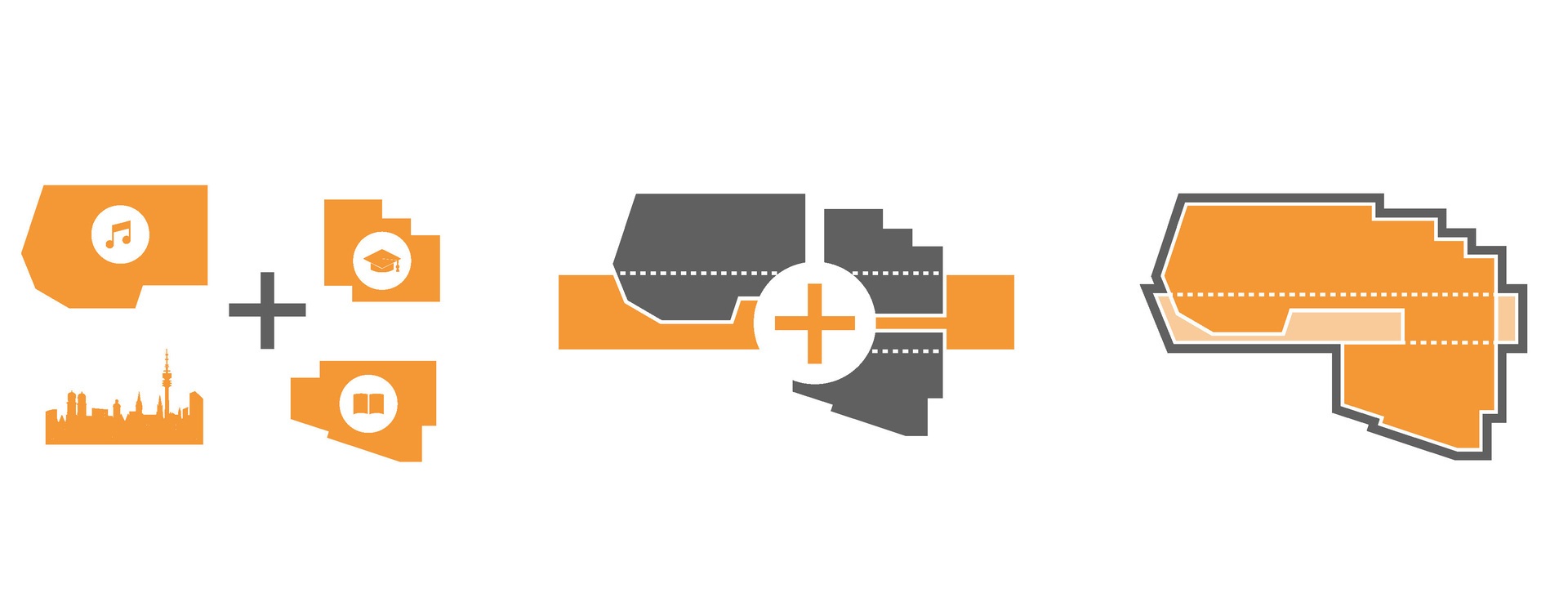
It quickly became clear that we wanted to take part in the competition and envision the future of this iconic building—one that many of our colleagues at the Munich office remember visiting as children. The question we asked ourselves was: how must the building transform to both reflect societal and technological change, yet retain its core identity?
The Gasteig was originally designed in the early 1970s by Raue, Rollenhagen, Lindemann, and Grossmann. Since then, not only have construction standards evolved, but society itself has undergone profound changes. Culture has always mirrored society: while the original design emerged at a time characterized by passive cultural consumption, what we need today are vibrant cultural spaces that foster active participation, diversity, and inclusion. We need architecture that gives room to culture’s integrative power within society.
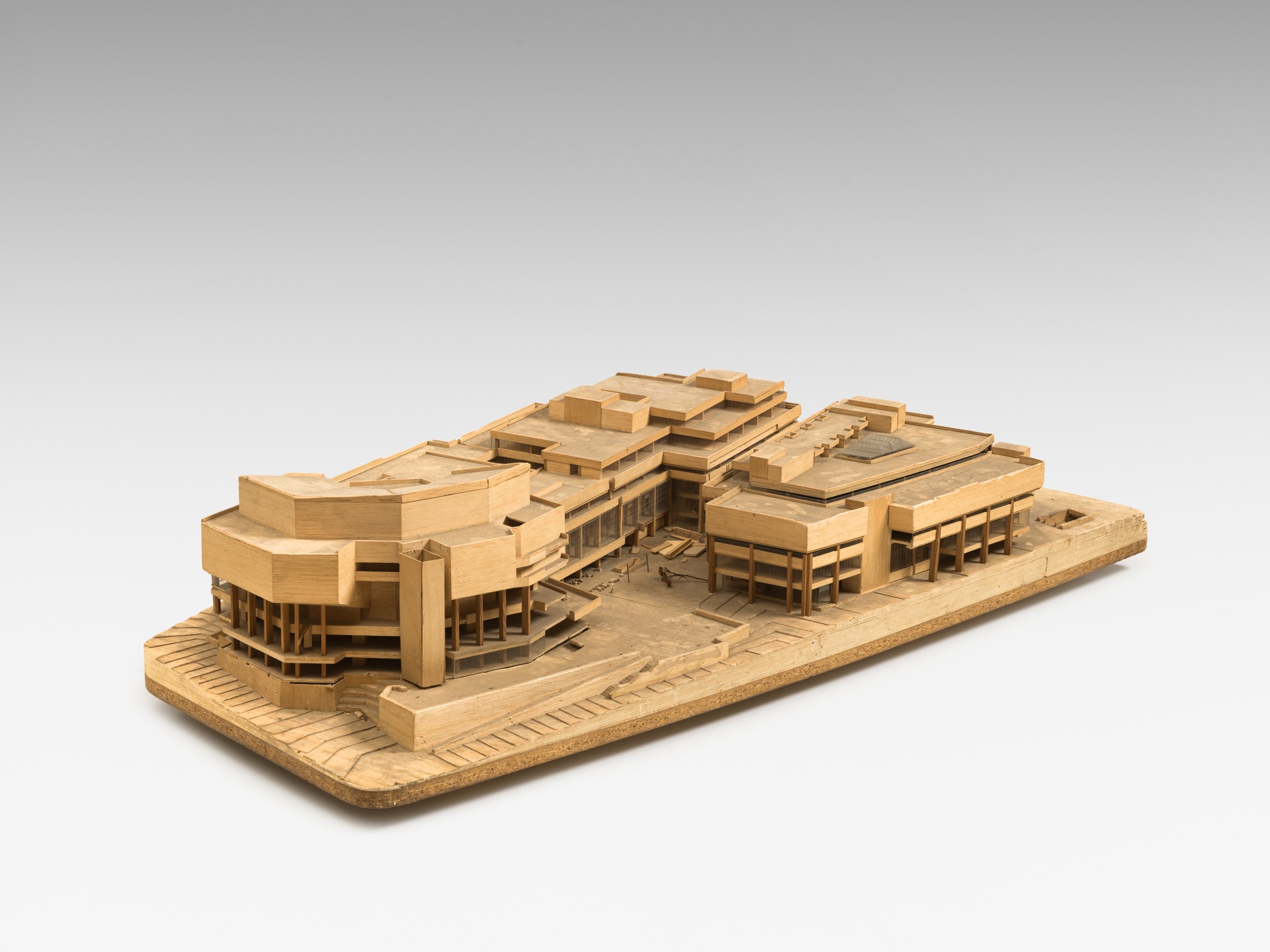
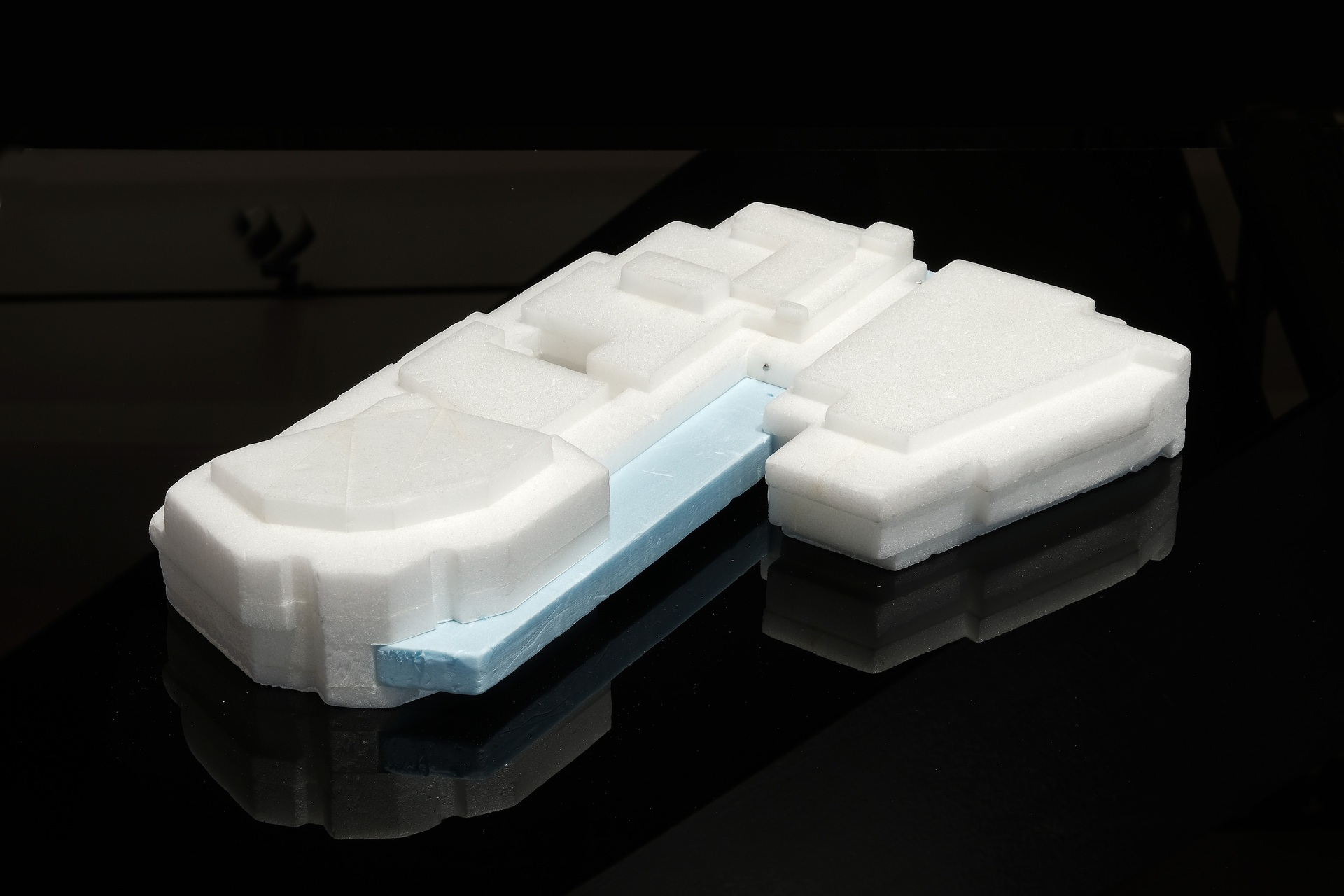
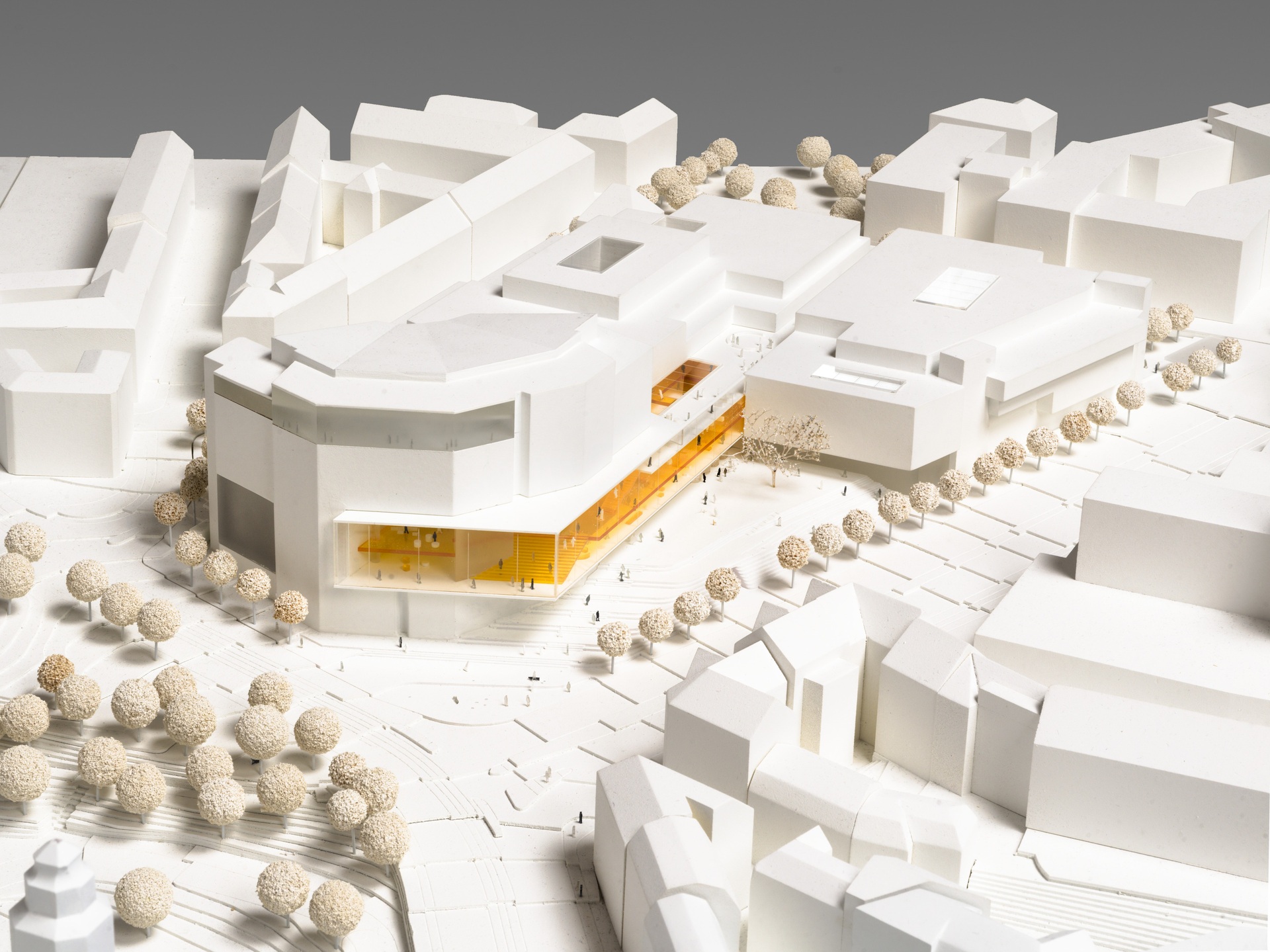
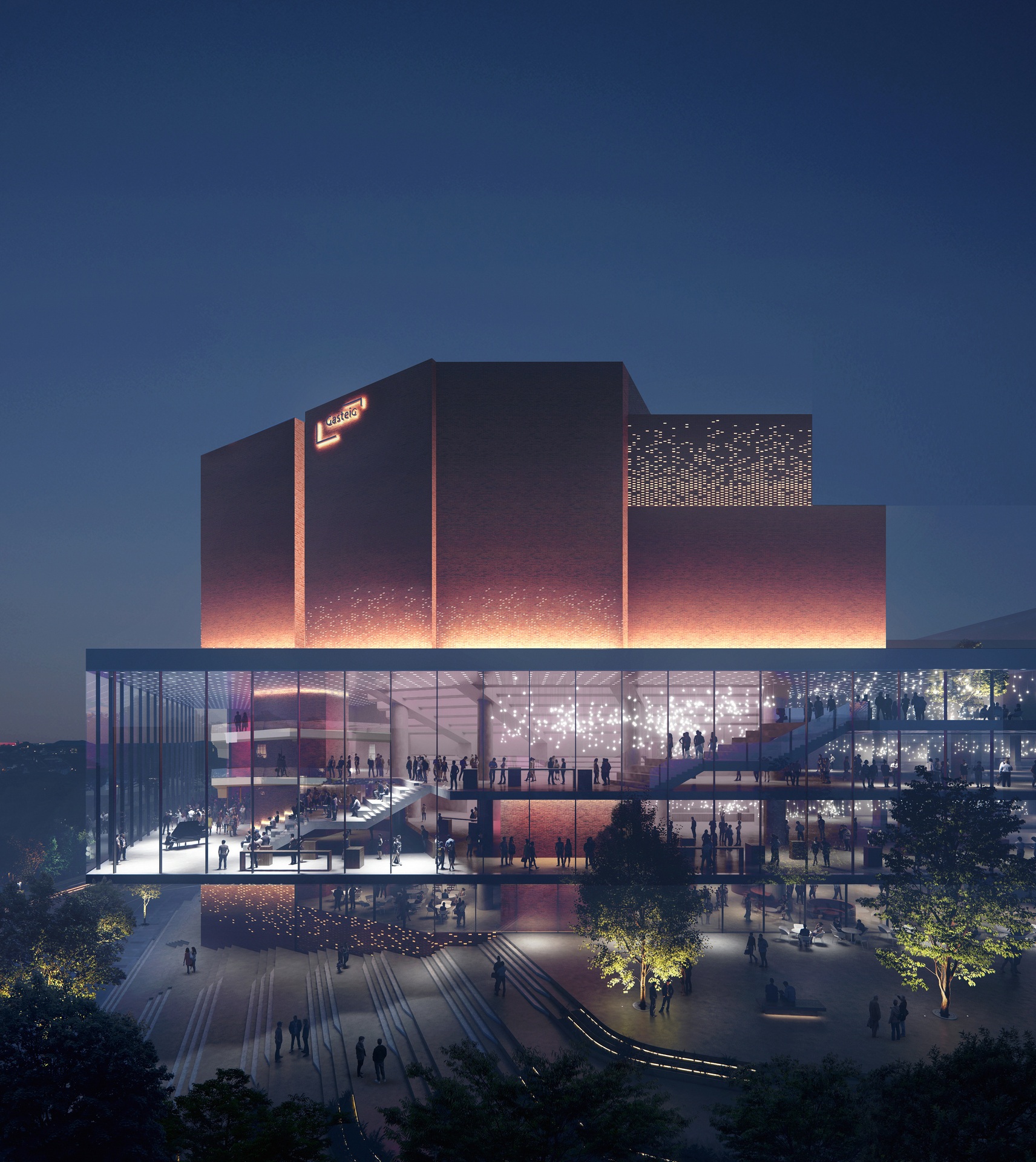
The original architects conceived the Gasteig as a protected space for culture, its red brick walls largely closed it off from the outside world. Yet at its heart was the idea of uniting a range of institutions under one roof—a building like a small village. That concept, we felt, remains just as relevant today—if not even more important. There was no need to reinvent the wheel. Our goal became to further develop, reinforce, and carry that idea into the future, transforming the fortress-like complex into an open and welcoming space. Our solution was simple: preserve the existing structure and make just one minimal intervention, the so-called “Kulturbrücke”—the Cultural Bridge. This glass volume, inserted like a missing puzzle piece, expands the shared facilities at the Gasteig’s heart, fostering collaboration among the institutions and encouraging social interaction among visitors. Its radical transparency opens the Gasteig to the city, inviting the public in and creating an entirely new kind of urban space—one that looks both outward and inward.

Beyond the growing desire for active participation in cultural life, society’s awareness of sustainability has also transformed. Looking back, we were ahead of our time in this regard: unlike most other submissions, our proposal aimed to preserve as much of the existing fabric as possible—not only the structure but the envelope as well. At the time, such a resource-saving approach was by no means a given.
That our concept ultimately convinced the competition jury is proof: yes, the solution really was that simple.
Our experience with large and complex industrial projects—as well as the Phase 0 that we call Programming—proved invaluable in tackling this challenge. After winning the competition, we spent more than half a year working closely with user groups, stakeholders, and policymakers to make the design even better. But the Gasteig demands more than just technical expertise—it calls for the courage to blend proven approaches with new challenges. The project has broadened our horizons: from industry to culture, from efficiency to emotion. For HENN, the Gasteig was a flagship project from day one. As we have accompanied social change across three generations, we have grown as an architectural practice through this project as well.
Several years have passed since the competition. The start of construction has been delayed, in large part due to difficulties finding an investor and soaring building costs amid global crises. Currently, the city of Munich is preparing a partnering process. Despite these setbacks, our optimism remains undiminished.
Remembered by Martin Henn, Design Principal and Managing Director, Andreas Fuchs, Head of Programming and Senior Associate, and Armin Nemati, Design Director Berlin and Senior Associate
This text was first published in wettbewerbe aktuell in July 2025.
